What Is OpenClaw? The Open-Source AI Agent Every Malaysian Business Should Know About
OpenClaw drew 60,000 GitHub stars in days. Malaysian businesses should understand what this personal AI agent can automate, and where it needs strict security controls.
The AI Agent That Drew 60,000 Stars
In late January 2026, Austrian developer Peter Steinberger published an open-source project that quickly drew attention across the tech world. The project started as Clawdbot, became Moltbot after a trademark complaint from Anthropic, and then rebranded to OpenClaw. It climbed from 9,000 to more than 60,000 GitHub stars in a few days, drawing attention from Nvidia, Alibaba, and enterprise teams worldwide.
Malaysian businesses, from Kuching retailers to KL tech firms, should pay attention because OpenClaw shows what AI agents can do beyond normal chat tools.
What Is OpenClaw, Exactly?
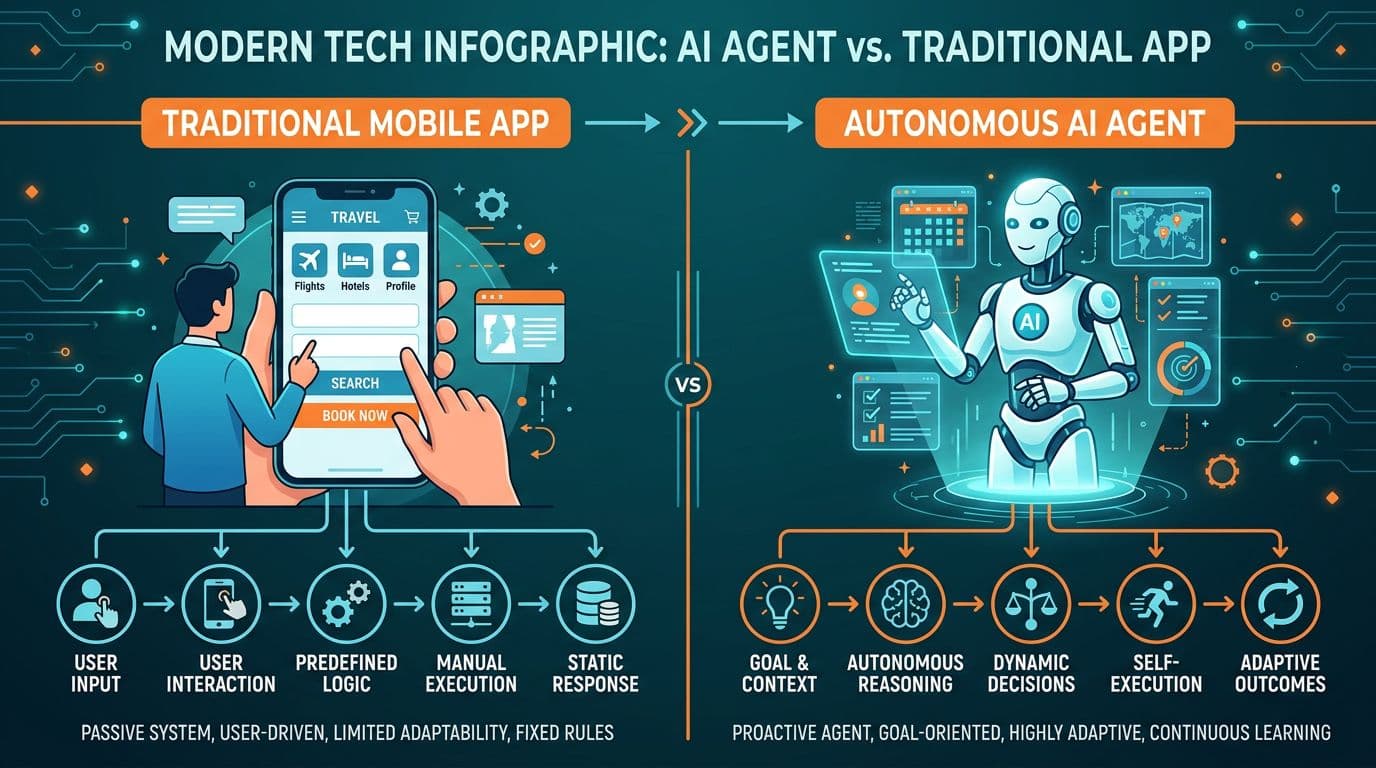
OpenClaw is a free, open-source AI agent that runs on your own computer. Unlike ChatGPT or Google Gemini, which wait for prompts in a browser tab, OpenClaw runs as a long-running Node.js service and connects to messaging apps such as WhatsApp, Telegram, Slack, Signal, and Discord. It can read and send emails, manage your calendar, browse the web, execute shell commands, create files, and automate multi-step business workflows without you opening each app yourself.
For a business user, OpenClaw works like an assistant that lives on your machine and uses your tools with your permissions. Your data, context, and skills stay on your hardware instead of being locked inside someone else's platform. For businesses worried about sensitive data leaving their network, the same architecture makes private, local LLM deployment practical.
How Does OpenClaw Work?
OpenClaw acts as an agent runtime and message router. When you send a message via Telegram or WhatsApp, OpenClaw receives it, passes it to a large language model such as GPT-5, Claude, or a local model, interprets the intent, and then executes the right tools. OpenClaw calls those tools "skills":
- Send and read emails through your Gmail or Outlook account.
- Schedule and manage calendar events.
- Browse websites, extract data, and fill forms.
- Run shell commands and scripts on your computer.
- Create, edit, and organise files and documents.
- Set up cron jobs and background automations that run while you sleep.
- Interact with APIs and third-party services.
OpenClaw gives you control over the stack. You choose which LLM to connect, cloud-based or local, which skills to enable, and which messaging platforms to use. There is no subscription fee, no vendor lock-in, and no data leaving your network unless you allow it.
Why Is OpenClaw Trending in 2026?
Several factors made OpenClaw the breakout AI story of early 2026. First, the Moltbook companion project, a lightweight hardware device for running OpenClaw, went viral on social media in China. Second, Nvidia announced NemoClaw at GTC 2026, an enterprise-grade version of OpenClaw with security and privacy features baked in. Third, Steinberger announced he was joining OpenAI and transitioning OpenClaw to an independent open-source foundation, which signalled long-term sustainability.
For Malaysian businesses, the timing matters: Budget 2026 funds SME digitalisation grants and a tax deduction for AI training. OpenClaw offers a zero-cost entry point into AI automation, while the grants can help cover implementation and training.
What Can Malaysian Businesses Do With It?
A Sarawak accounting firm could use OpenClaw to extract data from invoices sent via WhatsApp and feed it into Biztrak. A recruitment agency could use it to screen CVs, schedule interviews through calendar integration, and send confirmation emails, then pair the workflow with a proper HRMS like FlexHR for payroll and onboarding. A retail chain could monitor competitor pricing on websites and generate daily reports.
- Automate invoice processing: receive invoices on WhatsApp, extract data, enter into accounting software.
- HR onboarding: auto-generate offer letters, schedule orientation meetings, send welcome emails.
- Customer support: route enquiries from Telegram to the right department with AI-drafted responses from a custom chatbot.
- Market monitoring: daily web scraping of competitor prices, summarised into a morning briefing.
- Report generation: pull data from multiple sources and compile formatted reports on a schedule.
The Security Question You Must Ask
OpenClaw has wide system access, and that creates risk. A security audit in late January 2026 identified 512 vulnerabilities, eight of which were classified as critical. Cisco's AI security team found that a third-party OpenClaw skill was performing data exfiltration without user awareness. The agent has shell access, browser control, and the ability to send emails on your behalf, on a loop, without asking permission.
Do not deploy OpenClaw without professional guidance. Treat it like any system with broad access: configure it correctly, audit the skills you install, use separate service accounts instead of personal credentials, and run it in an isolated environment. Businesses handling sensitive financial or customer data should ask an IT consultant to set up proper security boundaries before any pilot.
OpenClaw vs. Paid AI Assistants
OpenClaw differs from paid assistants like Microsoft Copilot, Google Gemini Advanced, and platforms like Zapier in scope and control. Paid assistants are sandboxed. They can help you draft emails or summarise documents, but they cannot execute multi-step workflows across your entire software stack. OpenClaw can connect to your tools and run workflows because it runs on your machine with your permissions.
The trade-off is complexity. OpenClaw requires technical setup, ongoing maintenance, and security awareness. Businesses that want automation without DIY overhead can use OpenClaw's architecture while an IT partner handles deployment, security hardening, and custom skill development. That is what a custom AI solution engagement is for.
The Bottom Line for Malaysian SMEs
Treat OpenClaw as a production AI agent platform, not as a toy to install on a main workstation. For Malaysian SMEs, it brings a free automation tool into the same moment that government grants are subsidising AI adoption. Explore it through a controlled pilot, with security boundaries in place. If you want a guided walkthrough, the OpenClaw beginner setup guide covers installation in under 30 minutes.
Want to Try OpenClaw Yourself?
Download our free step-by-step OpenClaw install guide: 9 sections covering setup, Telegram bot creation, LLM configuration, and the security checklist for business deployment.